Best Garage Cabinets (2026)

About the author
The “one cabinet” decision that wrecks a garage setup
The best garage cabinets look simple to buy, but one wrong choice can haunt your layout. For example, doors can swing into your car path, the depth can eat your walkway, or drawers can’t handle what you actually store.
It’s rarely a total disaster. Instead, it becomes a slow drip of daily annoyance.
That’s why choosing the best garage cabinets isn’t about “pretty doors.” It’s about fit, depth, door style, and a cabinet system that matches your zones (workbench, lawn/garden, auto, household storage).
This page compares 5 proven garage cabinet lines for 2026. It’s built for real DIY garages and practical installs, including metal garage cabinets and modular options that scale into a full garage cabinet system.
Quick start: what matters most before you buy
Disclosure: As an Amazon Associate, cantyshanty may earn from qualifying purchases. This doesn’t change what we recommend.
Here’s what we optimize for, so your cabinets work every day (not just on install day):
- Better layout (wall space, door swing, and depth that doesn’t crowd your parking)
- Durable storage (shelves/drawers that don’t feel flimsy when loaded)
- Modularity (so you can build a garage cabinet system over time)
If you want the planning basics first, start at Garage Cabinets hub
Best Garage Cabinets (2026): Top 5 Picks
| Image | Product | Best for | Key feature | View on Amazon |
|---|---|---|---|---|
 | Gladiator Premier Series GAGB28FDYG Freestanding Garage Base Cabinet | Building a modular garage cabinet system that’s easy to expand | Steel cabinet body with adjustable shelf and a system that matches other Gladiator pieces | View on Amazon |
 | NewAge Products Bold Series 3.0 7-Piece Garage Cabinet Set | Full-wall garage storage cabinets with a clean, built-in look | Modular set layout (tall + base + wall pieces) to create a continuous cabinet run | View on Amazon |
 | Seville Classics UltraHD Tall Storage Cabinet | Budget-friendly vertical storage when you need height more than drawers | Adjustable shelves with a compact footprint for tight garages | View on Amazon |
 | Husky Heavy-Duty Welded Steel Garage Base Cabinet | Work-zone storage under/near a bench (tools, fasteners, heavier items) | Heavy steel construction with a “shop cabinet” feel for daily use | View on Amazon |
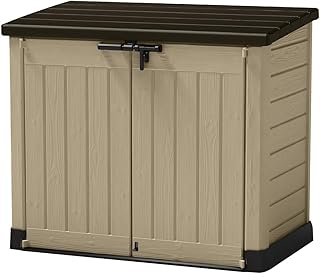 | Keter Store-It-Out Max Resin Outdoor Storage Cabinet | Moisture-prone garages and “dirty” gear (yard tools, chemicals, pool stuff) | Resin construction that won’t rust and is easy to wipe down | View on Amazon |
1) Gladiator Premier Series GAGB28FDYG Freestanding Garage Base Cabinet — Best overall for most garages (modular, durable, easy to expand)
A strong “start here” cabinet if you want garage storage cabinets that can grow into a full wall system.
Watch for: plan door swing and handle clearance, so you’re not fighting your parking or walkway
Best for: building a modular garage cabinet system over time
What you’ll like: steel construction + adjustable shelf, plus it pairs cleanly with matching Gladiator cabinets
🧐 Quick verdict: The most practical “buy once, expand later” option for a real garage cabinet system.
| Pros ✅ | Cons ⚠️ |
|---|---|
| ✅ Easy to expand into a matching lineup of garage cabinets | ⚠️ Measure depth + door swing so it doesn’t crowd your bay |
| ✅ Steel cabinet body feels “garage appropriate” (not like indoor furniture) | |
| ✅ Works well as a base cabinet under a countertop/work surface |
Why it’s a top pick: For most DIY garages, the win is durability plus modularity. You can start with one base cabinet for a work zone (tools, chargers, chemicals) and then expand into a consistent layout, instead of a random mix of shelves and bins.
Decision bullets
- Best zone: Work zone (near a bench) or household storage zone (paint, supplies, hardware).
- Depth reality check: Before buying, confirm you can still walk past it with doors open. Use our depth walkthrough: [GUIDE:/garage-cabinet-depth-guide-standard-vs-deep/].
- How it installs: Freestanding is forgiving in older garages (wavy walls, odd studs). You can still anchor for safety.
- How to scale it: Add matching wall cabinets above and a tall cabinet at the end to “cap” the run like a built-in.
- Best for: Most people who want the best garage cabinets without overcomplicating the first purchase.
Shop tip: Plan your cabinet run by zones first (not by “what fits on the wall”). That way, you avoid the classic mistake: all tall cabinets and nowhere for daily-use tools. Use: Garage Cabinets Layout Plan Zones
2) NewAge Products Bold Series 3.0 7-Piece Garage Cabinet Set — Best for a matched wall of garage storage cabinets (clean “built-in” look)
Ideal when you want a coordinated garage cabinet system (talls + bases + uppers) without piecing it together one cabinet at a time.
Watch for: confirm your wall length and outlet locations before committing to a set layout
Best for: a full-wall run of garage cabinets that looks intentional
What you’ll like: modular pieces create a continuous “shop wall” with uppers and tall storage
🧐 Quick verdict: Best pick when you want the “finished garage” look and a matched set of garage storage cabinets.
| Pros ✅ | Cons ⚠️ |
|---|---|
| ✅ Set-based approach makes it easier to build a cohesive garage cabinet system | ⚠️ You need to plan around outlets, windows, and wall obstructions |
| ✅ Great mix of tall + base + wall cabinets for real garage zones | |
| ✅ Helps reduce the “random storage” look fast |
If your goal is a “one wall makeover” with matching garage cabinets, sets are the shortcut. You get uppers for daily-grab items, bases for heavier stuff, and at least one tall cabinet for awkward storage (sprayers, folding chairs, long tool cases).
Why it’s a top pick: A set pushes you toward a balanced layout. So, you don’t end up with only tall cabinets (harder daily access) or only base cabinets (wasted wall height).
Decision bullets
- Best zone: “Main wall” storage zone—where you want a clean run that hides clutter.
- How to plan it: Mark your wall studs, outlets, and a “no-block” area for switches/hoses before you choose a layout. Use: Garage Cabinets Layout Plan Zones
- Depth reality check: Most people regret going too deep near a parking bay. Compare standard vs deep: [GUIDE:/garage-cabinet-depth-guide-standard-vs-deep/]
- Install note: Treat wall cabinets like a serious mount—hit studs, use the right hardware, and keep a level reference line.
- Best for: Garage storage cabinets that look built-in and keep the floor clear.
3) Seville Classics UltraHD Tall Storage Cabinet — Best budget-first tall cabinet (tight garages, vertical storage)
A solid choice when you mainly need closed vertical storage, but you’re not trying to build a whole matched wall yet.
Watch for: tall cabinets need a flat floor and safe anchoring, so they don’t rack or tip
Best for: vertical storage in tight garages with limited wall space
What you’ll like: adjustable shelves make it easier to fit bins, cases, and awkward items
🧐 Quick verdict: Best “one tall cabinet” move when you want garage cabinets fast and you’re keeping it simple.
| Pros ✅ | Cons ⚠️ |
|---|---|
| ✅ Big storage gain without needing a full cabinet system plan | ⚠️ Not the same “built-in wall” feel as a matched modular system |
| ✅ Adjustable shelves are practical for bins and tool cases | |
| ✅ Strong option when wall space is broken up (windows, doors, hose reels) |
Sometimes the right move is one tall cabinet that gets clutter off shelves and off the floor. If your garage is short on clean wall space (windows, doors, water heaters, panels), tall cabinets can be easier than long cabinet runs.
Why it’s a top pick: It’s a practical first upgrade. You get better daily function without needing perfect walls or a full remodel.
Decision bullets
- Best zone: Household storage (paint, paper goods), sports, seasonal bins.
- Depth tip: In narrow garages, a slightly shallower cabinet can be the difference between “fine” and “annoying.” Use: [GUIDE:/garage-cabinet-depth-guide-standard-vs-deep/]
- Stability: Level the feet (or shim) so doors align and the cabinet doesn’t twist.
- Workholding reality: Put heavy items down low. Keep light or rare-use items up high.
- Best for: Budget-friendly garage storage cabinets that still feel like a real upgrade.
Quick win: If you’re deciding between cabinets and open shelving, read this first: Garage Cabinets Vs Shelves
4) Husky Heavy-Duty Welded Steel Garage Base Cabinet — Best for a work zone (tough metal garage cabinets feel)
When you want a cabinet that feels like shop equipment: sturdy, simple, and ready for daily tool use.
Watch for: plan your countertop/work surface height if you’re placing it under a bench run
Best for: tool storage near a workbench (power tools, hand tools, hardware)
What you’ll like: welded steel “work cabinet” vibe that holds up to regular garage use
🧐 Quick verdict: Best pick if your priority is tough metal garage cabinets for a real work zone.
| Pros ✅ | Cons ⚠️ |
|---|---|
| ✅ Built for garage tool storage (not just light household items) | ⚠️ Heavy-duty cabinets are less forgiving if your floor is uneven—level carefully |
| ✅ Great under a countertop as part of a workbench run | ⚠️ Not as “mix-and-match pretty” as some modular sets |
| ✅ Good choice if you want to lock up tools |
If your garage has a real work zone, you’ll feel the difference between a light storage locker and a heavy-duty steel base cabinet. This is the cabinet that keeps daily tools from migrating onto the benchtop.
Why it’s a top pick: It’s the right tool for the job. A work zone needs tough doors, solid shelves, and a cabinet that doesn’t feel delicate when you’re moving tools in and out all week.
Decision bullets
- Best zone: Workbench zone (assembly, repairs, tool charging).
- Layout tip: Put drawers/cabinets closest to where you stand. Put tall cabinets at the ends, so they don’t steal elbow room.
- Metal vs wood reality: Metal is usually the safer bet for garages with humidity, temperature swings, and chemical storage. Compare: Metal Vs Wood Garage Cabinets
- Install note: If you’re adding a countertop, confirm your finished height before you anchor anything.
- Best for: A tough base cabinet that behaves like shop equipment.
Learn what matters in steel: [GUIDE:/metal-garage-cabinets-what-to-look-for/]
5) Keter Store-It-Out Max Resin Outdoor Storage Cabinet — Best for moisture-prone garages (no rust, easy cleanup)
A smart pick for garages that get damp, salty air, or muddy gear—resin won’t rust and wipes clean fast.
Watch for: resin cabinets are great for “dirty storage,” but don’t expect the same rigidity as welded steel
Best for: lawn/garden gear, chemicals, and messy items you don’t want inside metal cabinets
What you’ll like: moisture-resistant construction and easy cleanup after spills
🧐 Quick verdict: Best “no-rust” cabinet for damp garages and messy storage zones.
| Pros ✅ | Cons ⚠️ |
|---|---|
| ✅ Won’t rust—great in humidity-prone garages | ⚠️ Not as rigid as heavy steel garage cabinets |
| ✅ Easy to wipe down after spills and dirt | ⚠️ Best for storage, not as a “workbench base” cabinet |
| ✅ Great for yard/pool/chemical zones |
Not every garage needs all-steel cabinets. If your main problem is moisture, mud, pool chemicals, or fertilizer bags, resin can be the right material—even if it’s not the most premium-looking option.
Why it’s a top pick: It solves a real garage problem: corrosion and cleanup. So, you can put messy stuff in a cabinet that doesn’t care about mess.
Decision bullets
- Best zone: Lawn/garden zone, pool zone, chemical zone.
- Placement tip: Keep it near the garage door for quick access (fertilizer, spreader, muddy tools) and less tracking inside.
- Metal vs resin: Resin wins on corrosion resistance, but metal wins on rigidity and security. Compare materials: Metal Vs Wood Garage Cabinets
- Safety note: Store chemicals responsibly and keep incompatible products separated.
- Best for: Moisture-prone garages and “dirty storage” that you want behind doors.
Want more options focused specifically on garage storage cabinets? See: Best Garage Storage Cabinets
How we choose
To recommend garage cabinets that work in real garages, we focus on what changes day-to-day use:
- Layout fit (depth, door swing, and how it affects parking/walkways)
- Structure (how the cabinet feels when loaded and used daily)
- Modularity (can it grow into a garage cabinet system?)
- Material reality (metal garage cabinets vs resin/wood based on moisture and abuse)
- Work zones (workbench storage vs household vs lawn/garden)
Don’t buy the wrong garage cabinets
Don’t buy this if…
- You haven’t measured your usable depth (cabinet depth + door swing + walkway). That’s the #1 regret. Use: [GUIDE:/garage-cabinet-depth-guide-standard-vs-deep/]
- You need a full “workbench wall,” but you’re only buying tall cabinets. Tall cabinets store a lot, but they don’t replace base cabinets + a countertop work run.
- You want furniture-grade wood in a garage with humidity swings and chemical storage. If moisture is a concern, metal garage cabinets are usually the safer bet.
Buy this if…
- You want a cleaner garage with closed storage that hides clutter and keeps the floor open.
- You’re building zones (work, household, lawn/garden) and want a garage cabinet system that matches how you actually use the space.
- You’re tired of open shelving looking messy and collecting dust. Cabinets are the “reset button.” Compare: Garage Cabinets Vs Shelves
Buyer’s guide: how to choose the best garage cabinets for your space
Start with zones (not cabinet counts)
Before you shop, decide what your garage needs to do. Most garages have 3–4 zones:
- Work zone: tools, chargers, hardware, bench space
- Household storage: paint, paper goods, seasonal bins
- Lawn/garden: dirty tools, chemicals, sprayers
- Auto: fluids, detailing, jacks/stands
Then match cabinet types to each zone. Planning help: Garage Cabinets Layout Plan Zones
Depth: standard vs deep cabinets (the parking test)
Cabinet depth is the silent deal-breaker. A deep cabinet sounds great, but it can crowd parking and walkways fast.
Do a quick test:
- Tape the cabinet depth on the floor.
- Add door swing space (pretend the doors are open).
- Walk the path with your “real life” items (trash can, mower handle, stroller, tool cart).
Depth breakdown here: [GUIDE:/garage-cabinet-depth-guide-standard-vs-deep/]
Metal vs wood (and why garages punish the wrong choice)
Garages swing in temperature, humidity, and abuse. Because of that, metal garage cabinets are common: they’re usually more forgiving around moisture and chemicals.
- Choose metal if you want durability, easy cleanup, and a “shop” feel.
- Choose wood if you’re building a custom wall and your garage is more climate-stable (or you’re sealing/finishing properly).
Material comparison: Metal Vs Wood Garage Cabinets
Cabinet types that actually matter (base, wall, tall, locker)
Most “best garage cabinets” setups work best as a mix:
- Base cabinets: best for heavy items and workbench runs.
- Wall cabinets: best for daily-use items while keeping floor space open.
- Tall cabinets/lockers: best for awkward/tall storage and end-of-run “caps.”
If you’re deciding between cabinets and shelves, read this first: Garage Cabinets Vs Shelves
Hardware and install reality (walls, studs, and leveling)
Cabinets usually fail in two ways: they go out of level, or they aren’t anchored correctly.
- Find studs and plan cabinet seams around them when possible.
- Level the first cabinet perfectly. Everything keys off that one.
- Use shims on uneven concrete so doors align and drawers slide correctly.
Shopping specifically for steel cabinets? Read: [GUIDE:/metal-garage-cabinets-what-to-look-for/]
Troubleshooting table: problem → cause → fix
| Problem you see | Likely cause | Fix that works in a real shop |
|---|---|---|
| Cabinet doors hit your car or block the walkway | Depth + door swing not planned | Tape out depth on the floor and plan door swing; consider shallower cabinets or move to a different wall |
| Drawers/doors don’t align after install | Uneven floor or cabinet not leveled before anchoring | Shim and level the base first, then anchor; re-check level across the whole run |
| Wall cabinets feel “loose” or shift | Not anchored into studs or wrong fasteners | Hit studs, use proper lag/screws, and use a level ledger board during install |
| Cabinet run looks cluttered fast | No zones; storing “everything everywhere” | Assign zones (work/household/lawn-auto) and group items; label shelves/bins |
| Rust spots or corrosion on metal cabinets | Moisture, salts, chemical exposure | Move chemicals to a resin cabinet; improve ventilation; wipe down and protect exposed metal |
| Not enough “daily access” storage | Too many tall cabinets, not enough uppers/bases near the bench | Add a wall cabinet row for daily-use items; keep tall cabinets at the ends |
| Cabinets feel sturdy but the garage is still messy | Floor items have no “home” (brooms, ladders, bins) | Add hooks/rails for long tools and dedicate one tall cabinet to bulky items |
| You’re out of space again in 6 months | No plan for expansion | Choose a modular garage cabinet system and leave an “expansion bay” on the wall |
For deeper planning help: Garage Cabinets Layout Plan Zones
Common mistakes and quick wins (shop-pro tips)
Quick wins that instantly improve a cabinet install
- Start with one “perfect” cabinet (leveled and anchored). Everything else keys off it.
- Use a ledger board for wall cabinets so you’re not fighting gravity while you hit studs.
- Put heavy stuff low (base cabinets) and daily-use stuff at chest height (wall cabinets).
- Leave a service gap for outlets, hose reels, and panel access. Don’t cabinet yourself into a future headache.
Common mistakes
- Buying cabinets before measuring depth + door swing (then “making it work”).
- Mounting wall cabinets without a plan for studs and blocking.
- Going all-in on one cabinet type (all tall, all base) instead of mixing for function.
A simple 5-step plan to choose the best garage cabinets
- Measure wall length, ceiling height, and usable depth (include door swing).
- Pick your zones (work, household, lawn/garden, auto).
- Choose cabinet types per zone (base for heavy, wall for daily, tall for bulky).
- Decide material based on your garage conditions (humidity, chemicals, abuse).
- Leave an “expansion bay” if you want a modular garage cabinet system later.
If you want a metal-specific checklist, use: [GUIDE:/metal-garage-cabinets-what-to-look-for/]
FAQs
1) What are the best garage cabinets for most DIY garages?
The best all-around choice is a modular steel line you can expand over time (base + wall + tall). It’s the simplest path to a real garage cabinet system, because you don’t have to guess your final layout on day one.
2) Are metal garage cabinets better than wood?
Often, yes—especially for garages with humidity swings, chemicals, and heavy tool use. Wood can be great for custom built-ins, but it needs the right build and finish. Comparison here: Metal Vs Wood Garage Cabinets
3) How deep should garage cabinets be?
Deep cabinets store more, but they can crowd parking and walkways fast. So, tape out the depth and test door swing before you buy. Use: [GUIDE:/garage-cabinet-depth-guide-standard-vs-deep/]
4) What’s the best layout for garage storage cabinets?
Build by zones: work zone near the bench, household storage where you access it easily, and a “dirty gear” zone near the door. Planning guide: Garage Cabinets Layout Plan Zones
5) Should I do cabinets or shelves in a garage?
Cabinets hide clutter and keep dust off items. Shelves are faster and cheaper, but they look messy fast unless you commit to bins. Full breakdown: Garage Cabinets Vs Shelves
6) Can I mix different cabinet brands?
Yes, but it’s harder to get a clean, built-in look and consistent heights/depths. If you want a cohesive wall, choose one cabinet system for the main run, then use one-off cabinets in secondary spots.
7) What should I look for in metal garage cabinets?
Focus on rigidity, shelf adjustability, door closure, and how you’ll anchor/level the cabinet. Checklist here: [GUIDE:/metal-garage-cabinets-what-to-look-for/]
8) Do I need to anchor freestanding garage cabinets?
It’s strongly recommended for tall cabinets and for any cabinet run that could tip or shift—especially on uneven floors or in homes with kids. Anchor into studs when possible.
9) What if I only need “storage cabinets” and not a full system?
Start with one tall cabinet for vertical storage and one base cabinet for heavy items near where you use them most. If you want more storage-focused picks, see: Best Garage Storage Cabinets
Conclusion: which garage cabinets should you buy?
If you want the most useful “start here” choice, go with a modular steel base cabinet like Pick #1 and build outward into a matching garage cabinet system.
If you want a full-wall transformation with coordinated garage storage cabinets, Pick #2 is the cleanest path.
If you need a simple vertical storage upgrade, Pick #3 is a practical tall-cabinet move.
For a real work zone with daily tool use, Pick #4 is the tough, shop-style option.
And if moisture and mess are your main enemies, Pick #5 is the no-rust, easy-clean solution.
For more garage cabinet system planning and options, start here: Garage Cabinets hub